
When Your Doctor Won't Participate: Conscientious Objection and What Patients Need to Know

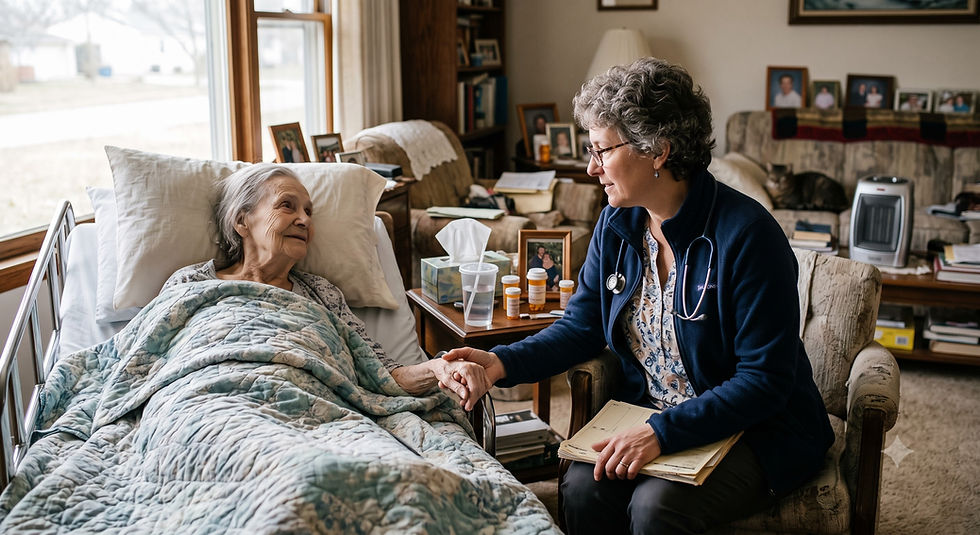
One of the first obstacles many patients encounter when they begin exploring medical aid in dying is an unexpected one: the doctor they trust most cannot participate. This is not always a matter of personal objection. Sometimes it is a matter of where they work. Sometimes it involves federal law. Understanding why this happens, and what you can do about it, is essential for anyone navigating the assisted dying process in New York.
Conscientious objection under New York law
New York's Medical Aid in Dying Act gives any clinician or health care facility the right to decline participation in the medical aid in dying process. No reason is required. A provider may object on moral or religious grounds, or simply decline without explanation, and the law fully protects them from any professional or legal consequence for doing so. And even when a provider may wish to participate, they may work for a health system or facility that has chosen not to participate.
Importantly, a provider or facility that opts out of medical aid in dying is still obligated to support their patients and their patient’s choices. Conscientious objection is the right to decline a specific role in the aid in dying process; it is not a license to abandon the patient or reduce the quality of care. Individual providers (doctors, nurses, social workers and others) as well as organizations such as hospices and hospitals still need to ensure that patients receive the care that they want, by being clear about their policies, and facilitating referrals and transfers as appropriate.
What this means for patients
If you are receiving hospice care and you want to pursue medical aid in dying, you may find that your hospice is unwilling to assist with the aid in dying process. Your hospice team can continue to manage your symptoms, provide emotional and spiritual support, and coordinate your care — but the attending physician role for medical aid in dying, the consulting physician evaluation, and the mandatory mental health evaluation may need to come from a separate clinical team outside your hospice.
This is manageable, but it requires knowing that the gap exists, understanding what you need to do about it, and having enough time to put the right team in place. Patients who discover this late in their illness, after significant disease progression, may find their options limited.
The same is true for patients whose primary care physician or specialist cannot participate due to institutional policy. The earlier you understand what your existing care team can and cannot provide, the more time you have to act.
How Quiĕtus helps
Quiĕtus was built in part to address this gap. We work with patients whose existing care team — whether due to conscientious objection, institutional policy, or hospice restrictions — is unable to facilitate the medical aid in dying process. We coordinate the clinical pieces that are missing: the attending physician willing to serve in that role, the consulting physician for the required independent second opinion, and the licensed psychologist for the mandatory mental health evaluation.
We do this without disrupting your existing care. Your oncologist, your hospice team, your palliative care provider — those relationships stay intact. Quiĕtus fills in what they cannot provide. Our role is coordination and connection, not replacement.
If you are already navigating this situation, or if you want to understand your options before you run into a wall, reach out to us. The consultation is free, confidential, and without obligation. We are here to make sure that New York's new law is actually accessible to the people it was designed to serve.
This post was reviewed and verified by Daniel Cogan, NP



Comments